Muscle weakness and disability
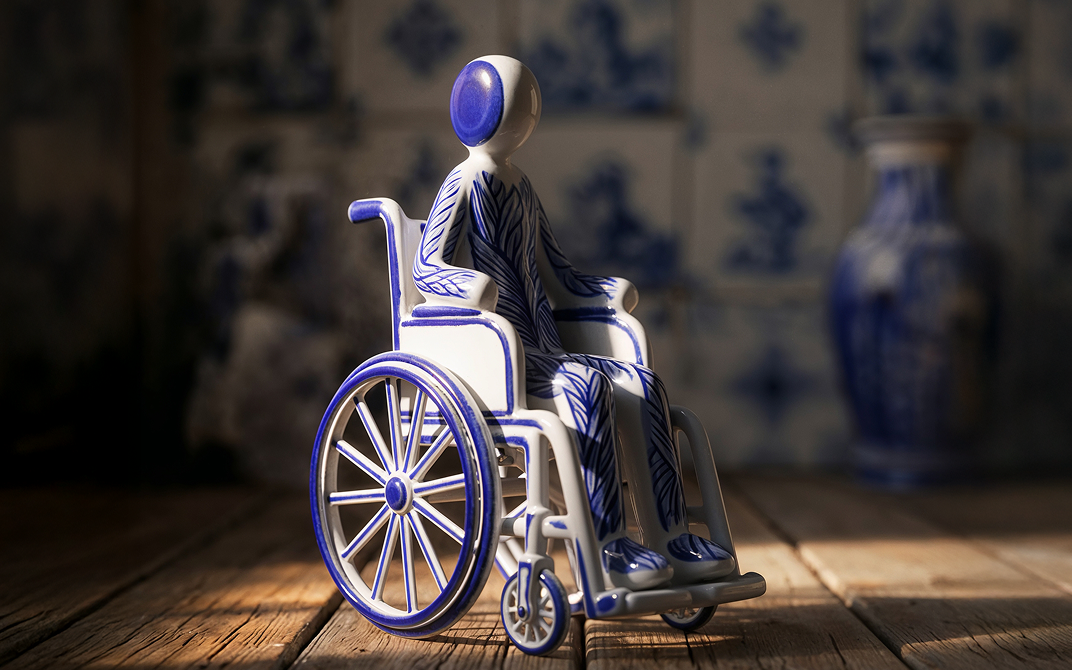
Muscle damage and weakness can make routine activities challenging for people living with AIM. Tasks such as walking, climbing stairs, rising from a chair, lifting objects, combing hair, and working may become difficult.1,3,4,8 Patients with AIM report pain, fatigue, and fluctuations in day-to-day symptomsa which may significantly impact physical and mental health.b,3,10
aQualitative interviews with 18 (61% female; median age, 52 years; median IIM duration, 5 years) patients with verified IIM diagnosis. Fatigue was reported by all patients, pain was reported as a key symptom next to fatigue, and symptom variation was reported by the majority of patients.3
bCross-sectional data obtained from the COVAD (COVID-19 Vaccination in Autoimmune Disease)-2 e-survey, an international, multicenter self-reported e-survey, with a particular focus on IIMs. This study included 1582 patients with IIM and 3675 controls.10

Extramuscular manifestations
and mortality
AIM can affect multiple organ systems beyond skeletal muscle. Depending on the subtype and severity of disease, patients may experience pulmonary, cutaneous, gastrointestinal, articular, or cardiac manifestations.2,11
Complications such as pulmonary disease, cardiac impairment, infections and cancer not only contribute to increased morbidity11,12, but are also commonly cited as the most frequent causes of death.2,11,12
Quality of life and social impact
The burden of AIM extends beyond physical symptoms. Pain, fatigue, limited mobility, difficulty sleeping and uncertainty around diagnosis can all affect quality of life.3,5,6,9 Patients may experience reduced ability to work, financial strain, limited social activities, reliance on caregivers, anxiety, and frustration.3,4,7,9,13–16
Continue exploring AIM
Learn more about the subtypes of AIM, burden of disease, and current and emerging treatments.
What is AIM?
AIM is a rare autoimmune rheumatic disease spectrum, encompassing heterogeneous subtypes with diverse clinical presentations.2
Role of autoantibodies
Autoantibodies are a hallmark feature of autoimmune myositis.16
Current Treatments
There remains an unmet need for effective and well tolerated treatments for AIM.17
Abbreviations:
AIM, autoimmune myositis.
References:
1. Malik A, et al. Front Neurol. 2016;7:64; 2. Lundberg IE, et al. Nat Rev Dis Primers. 2021;7:86; 3. Oldroyd A, et al. BMC Rheumatol. 2020;4:47; 4. Christopher-Stine L, et al. BMC Rheumatol. 2025;9(1):23; 5. Dyball S, et al. Rheumatology(Oxford). 2022;62(8):2673–2682; 6. Battista, et al. Curr Rheum Rep. 2024;26(11):383–39; 7. Peng Z, et al. Rheumatology(Oxford). 2024;63:1113–1122; 8. Christopher-Stine L, et al. J Manag Care Spec Pharm. 2020;26(11):1424–1433; 9. Lanis A, et al. Clin Exp Rheumatol. 2024;42:413–424; 10. Yoshida A, et al. Rheumatol Adv Pract. 2024;8(2):rkae028; 11. Marie I. Curr Rheumatol Rep. 2012;14:275–285; 12. Khoo T, et al. Nat Rev Rheumatol. 2023;19(11):695–712; 13. Andreasson et al. Clin Exp Rheumatol. 2025;43(2):230–240; 14. Daniel E, et al. PLoS One. 2024 Jul 26;19(7):e0307144; 15. Brady P, et al. Qual Life Res. 2025;34(7):1913–1924; 16. Groener M, Paik JJ. Front Immunol. 2025;16:1581323; 17. Natour AEH, Kivity S. Rambam Maimonides Med J. 2023;14(2):e0008.