AIM can reshape the lives of patients and those around them.9
Myositis-specific and myositis-associated autoantibodies2
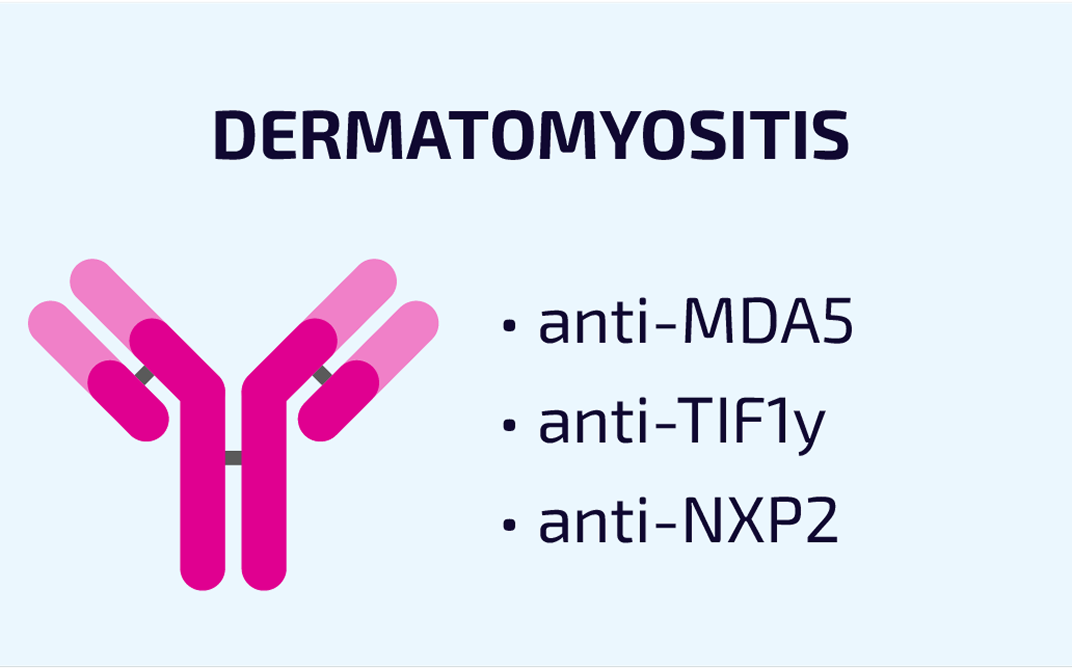
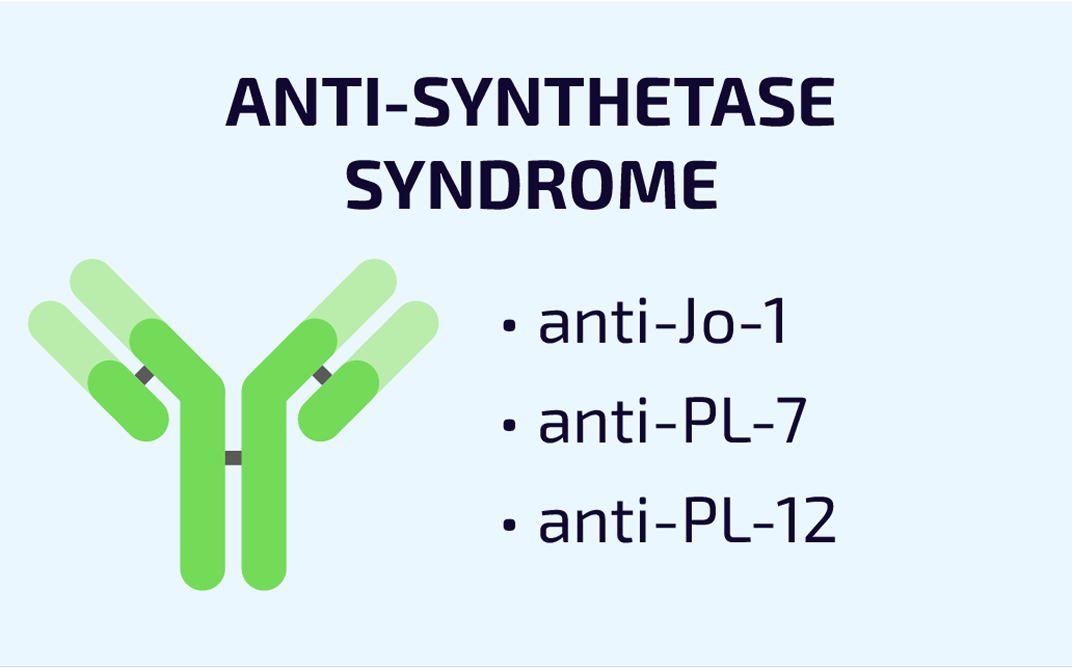
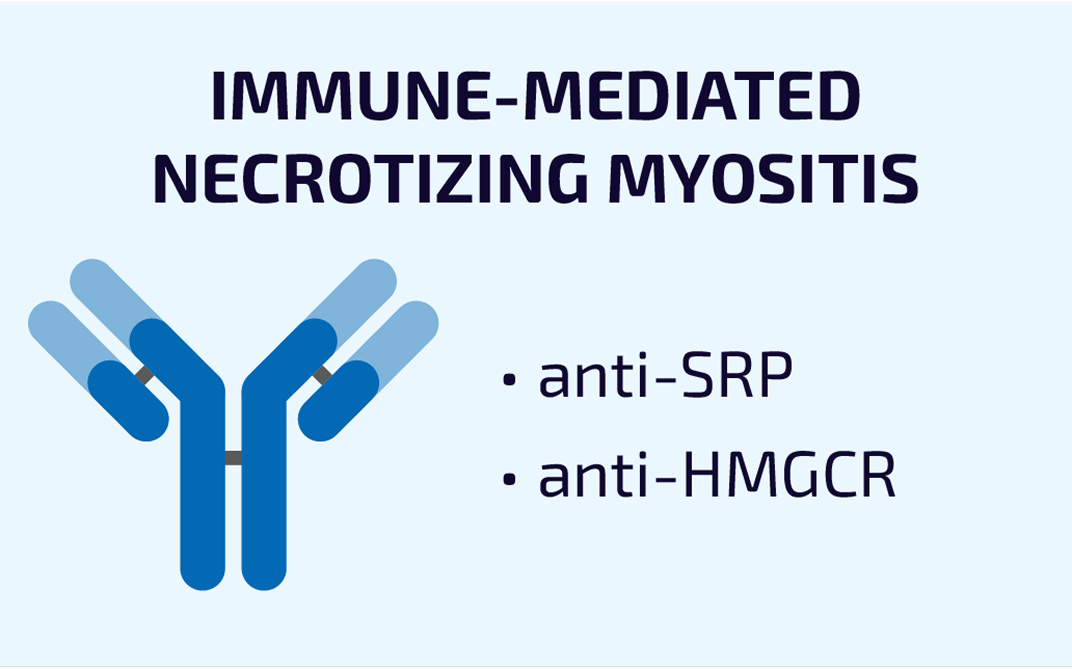
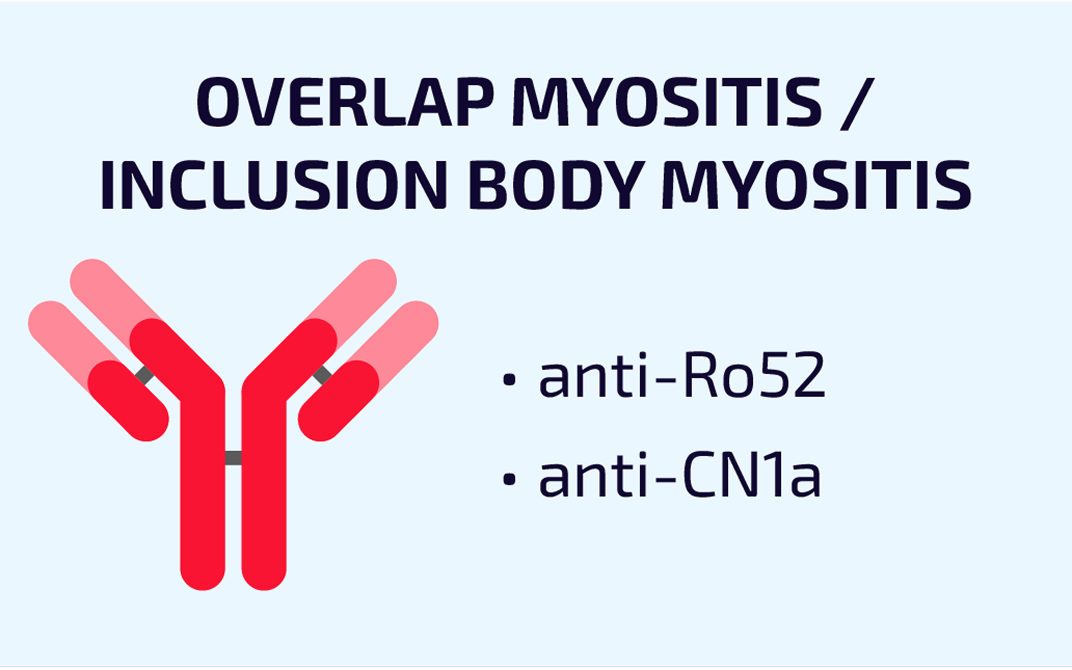
A growing range of autoantibodies have been identified across AIM subtypes. Myositis-specific autoantibodies (MSAs) are closely associated with distinct phenotypes and are used as biomarkers to facilitate diagnosis and prognosis, while myositis-associated autoantibodies (MAAs) may occur alongside other connective tissue diseases and overlap syndromes.2
Reports suggest autoantibodies are detectable in up to 80% of patients with AIM,3 with some hypothesizing that it is likely the remainder have autoantibodies yet to be discovered.2
Recognition of these antibody profiles has contributed to improved disease classification and a more nuanced understanding of subtype heterogeneity.2
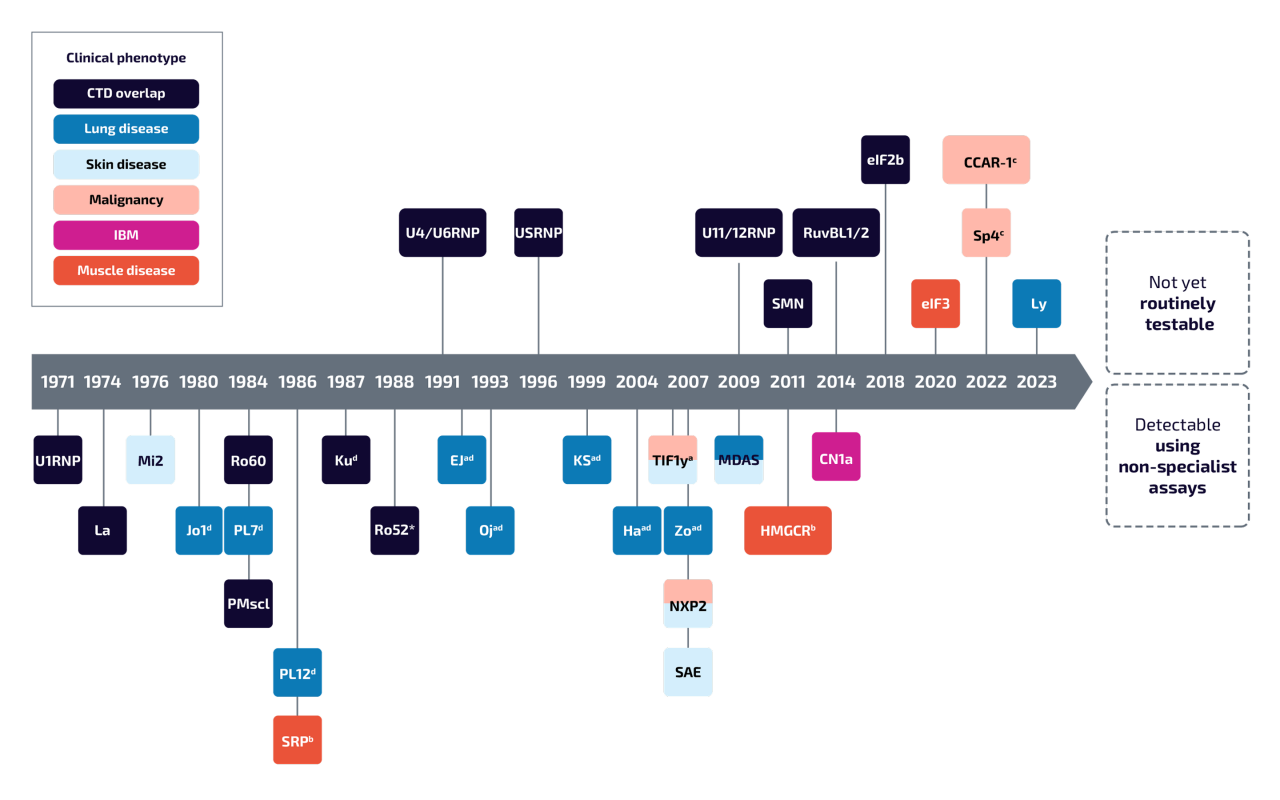
*Increases risk of ILD, regardless of which other MSA are present
a) concerns about reliability of some assays in current use
b) necrotizing myopathy
c) predominantly found alongside anti-TIF1γ, where their presence reduces cancer risk to a level that is comparable with the general population
d) antisynthetase antibodies
Figure from Harvey G, et al. Curr Rheumatol Rep. 2024;27(1):5. Copyright © Harvey G, et al. Licensed under Creative Commons 4.0 www.creativecommons.org/licenses/by/4.0
Autoantibodies in the diagnosis of AIM6
Autoantibody testing has become an important component of AIM diagnosis and subtype classification. Serological assessment, alongside clinical evaluation, imaging, and histopathology, can support earlier recognition of disease and identification of clinically relevant phenotypes.4–7
As our understanding of AIM evolves, autoantibody profiling continues to shape diagnostic approaches and clinical decision-making.2,4

Continue exploring AIM
Learn more about the subtypes of AIM, burden of disease, and current and emerging treatments.
What is AIM?
AIM is a rare autoimmune rheumatic disease spectrum, encompassing heterogeneous subtypes with diverse clinical presentations.8
Burden of disease
Current treatments
There remains an unmet need for effective and well-tolerated treatments for AIM.10
Abbreviations:
AIM, autoimmune myositis; CCAR-1, cell cycle and apoptosis regulator 1; CN1a, cytosolic 5’-nucleotodase 1A; CTD, connective tissue disease; EJ, glycyl-tRNA synthetase; elF2b, eukaryotic initiation factor 2B; elF3, eukaryotic initiation factor 3; HMGCR, 3-hydroxy-3-methylglutaryl-CoA reductase; ILD, interstitial lung disease; Jo1, histidyl tRNA synthetase; KS, asparaginyl-tRNA synthetase; Ly, cysteinyl-tRNA synthetase; MAA, myositis-associated autoantibody; MDA5, melanoma differentiation-associated gene 5; MSA, myositis-associated autoantibody; NXP2, nuclear matrix protein 2; OJ, isoleucyl-tRNA synthetase; PL7, threonyl-tRNA-synthetase; PL12, alanyl-tRNA synthetase; PMScl, polymyositis–scleroderma overlap; SAE, small ubiquitin-like modified activating enzyme; SMN, survival of motor neuron; Sp4, transcription factor Sp4; SRP, signal recognition particle; TIF1γ, transcription intermediary factor 1-gamma; U1/4/5/6/11/12 RNP, U1/4/5/6/11/12 small nuclear ribonucleoprotein; ZO, phenylalanyl-tRNA synthetase
References:
1. Groener M and Paik J. Front Immunol. 2025;16:1581323; 2. Harvey GR, et al. Curr Rheumatol Rep. 2024;27(1):5; 3. Wu Y, et al. Front Immunol. 2024;15:1439807; 4. Wang G and McHugh NJ. Clin Exp Rheumatol. 2025;43(2):364–71; 5. Diomedi M, et al. Clin Exp Rheumatol. 2026;44(2):167–177; 6. Paik JJ, et al. Rheumatology (Oxford). 2025;64(6):3288–302; 7. Halilu F, Christopher-Stine L. Rheumatol Immunol Res. 2022;3(1):1-10; 8. Lundberg IE, et al. Nat Rev Dis Primers. 2021;7(1):86; 9. Oldroyd A, et al. BMC Rheumatol. 2020;4:47; 10. Natour A, Kivity S. Rambam Maimonides Med J. 2023;14(2):e0008.