Current treatments for AIM have several limitations, and few are specifically approved for AIM, highlighting a need for new treatment options.1,2,4
Explore how treatment burden and lack of targeted therapies pose a challenge in treating AIM.1–3
Examples of how damage can accrue in different AIM subtypes
Disease ‘damage’ in AIM refers to irreversible change, and is distinct from disease ‘activity’.5
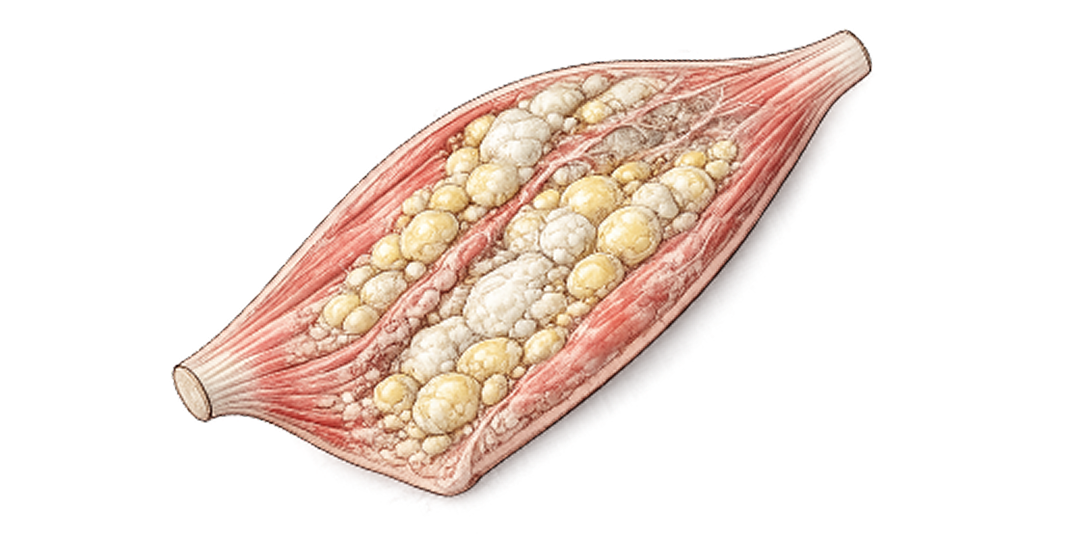
Immune-mediated necrotizing myopathy
In immune-mediated necrotizing myopathy, early structural muscle damage may lead to fatty replacement and muscle atrophy, leading to poor recovery.8,9
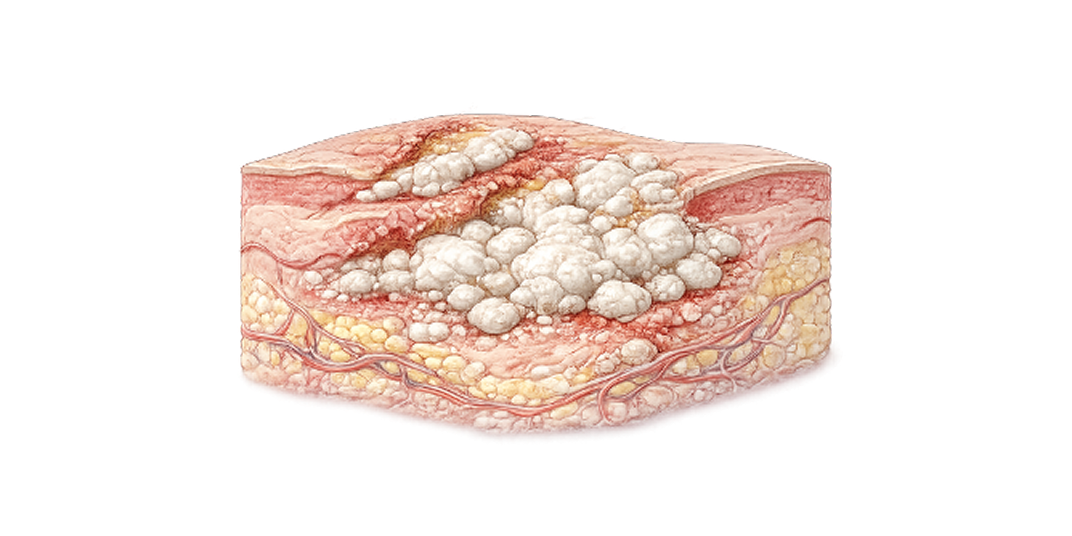
Dermatomyositis
In dermatomyositis, chronic inflammation can cause debilitating skin calcinosis in up to 20% of adult patients, which may be difficult to treat.10,11
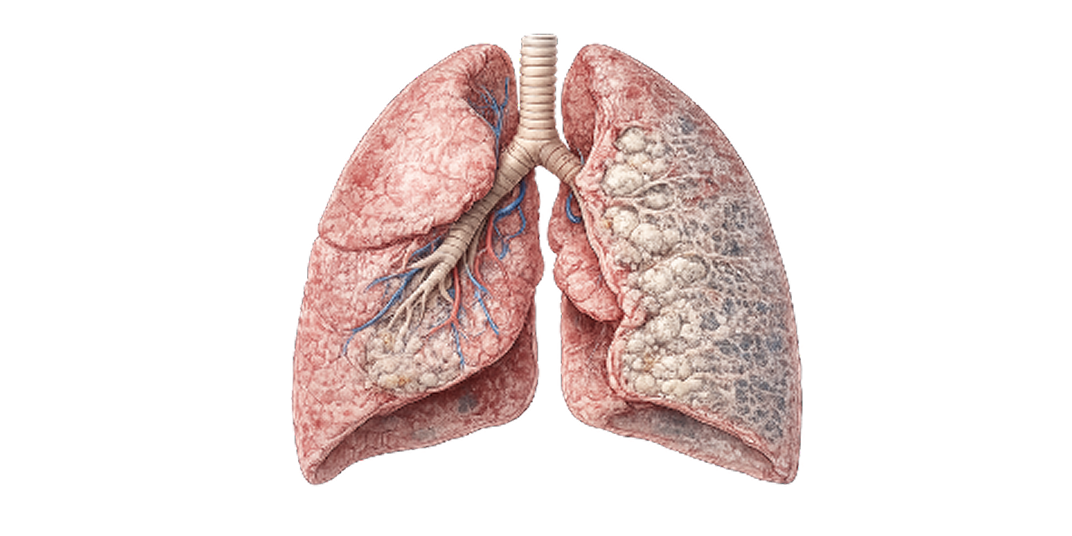
Antisynthetase syndrome
In antisynthetase syndrome, uncontrolled disease progression carries high risk of ILD with lung fibrosis, a major driver of morbidity and mortality.12,13
The critical importance of time in AIM treatment1
Treatment should be escalated as needed to achieve timely and durable disease control to mitigate the risk of irreversible tissue damage.1
Limitations of existing treatments
AIM management is constrained by a lack of targeted therapies.1,4
Current treatments for AIM typically involve sequential use of a range of immunosuppressive therapies, aimed at controlling muscle inflammation, preventing disease progression, and minimizing steroid exposure.4,14,15
With only IVIg specifically approved for adult dermatomyositis, many treatments are used off-label, including rituximab, mycophenolate mofetil, azathriopine, methotrexate, and JAK inhibitors .4,15,16
Several of these off-label options have limited data to support efficacy in myositis, with guidelines assessing strength of evidence as low for some commonly used treatments.4,16
Further, chronic use is associated with safety risks, particularly for products carrying boxed warnings.17–23

Commonly used treatments for AIM include:1,4,15,17
- Corticosteroids
- Immunosuppressant therapies:
- Methotrexate
- Azathioprine
- Corticosteroids
- Mycophenolate mofetil
- Tacrolimus
- Cyclosporine
- Cyclophosphamide
- IVIg
- Other therapies:
- Rituximab
- JAK inhibitors
- Hydroxychloroquine
- Physical therapy
Continue exploring current treatments for AIM
Treatment burden
Learn how current treatments can add substantially to patient burden.5,17
Lack of targeted treatments
Learn about the unmet need for immunomodulators that selectively target disease drivers.16
Abbreviations:
AIM, autoimmune myositis; ILD, interstitial lung disease; IVIg, intravenous immunoglobulin; JAK, Janus kinase.
References:
1. Lundberg IE, et al. Nat Rev Dis Primers. 2021;7(1):86; 2. Oldroyd A, et al. Clin Med (Lond). 2017;17(4):322–328; 3. Namsrai T, et al. Orphanet J Rare Dis. 2022;17:456; 4. Paik J, et al. Rheumatology. 2025;64:3288–3302; 5. Oldroyd, et al. BMC Rheumatol. 2020;4:47; 6. Janardana R, et al. Mediterr J Rheumatol. 2023 Aug 28;34(4):513-524; 7. Matsuda N, et al. Acta Radiol Open. 2022;11(2):20584601221075796; 8. Pinal-Fernandez I, et al. Ann Rheum Dis. 2017;76(4):681–687; 9. Allenbach Y, et al. Nat Rev Rheumatol. 2020;16(12):689–701; 10. Davuluri S, et al. Curr Opin Rheumatol. 2024;36(6):453-458; 11. Davuluri S, et al. Best Pract Res Clin Rheumatol. 2022;36(2):101768; 12. Sawal N, et al. J Thorac Dis. 2021;13(9):5556-5571; 13. Kouranloo K, et al. Rheumatology (Oxford). 2025;64(1):45-55; 14. Oldroyd AS, et al. Rheumatology (Oxford) 2022;61(5):1760–8; 15. Barsotti S, et al. Curr Treat Options Rheumatol. 2018;4:299-316; 16. Groener M, et al. Front Immunol. 2025;16:1581323; 17. Aggarwal R, et al. Clin Rheumatol. 2025;44:4169–4178;18. PROGRAF (tacrolimus) prescribing information. U.S. Food and Drug Administration/Astellas. 2021; 19. RITUXAN (rituximab) prescribing information. U.S. Food and Drug Administration. 2021; 20. CELLCEPT (mycophenolate mofetil) prescribing information. U.S. Food and Drug Administration. 2018; 21. Methotrexate prescribing information. U.S. Food and Drug Administration. 2023; 22. Azathioprine prescribing information. U.S. Food and Drug Administration. 2023; 23. Cyclosprine prescribing information. U.S. Food and Drug Administration. 2021.