Muscle weakness can affect routine activities
In AIM, weakness primarily affects proximal muscle groups, which can make activities such as walking, climbing stairs, rising from a chair, and lifting objects more difficult. Patients with AIM have reported challenges with reaching overheada, washing or drying hairb, and lower work productivity.a,2,4,5
As symptoms persist or progress, patients may need to adapt routines, pace activities, or rely on support from others.2,5
In AIM, muscle weakness can make everyday activities difficult.3,5,7
Washing and combing hairb,5
Getting dressed7
Climbing stairs7
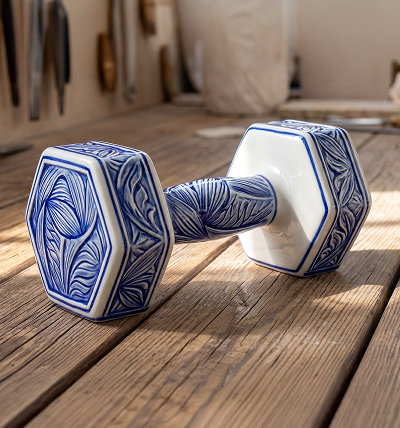
Lifting objects7
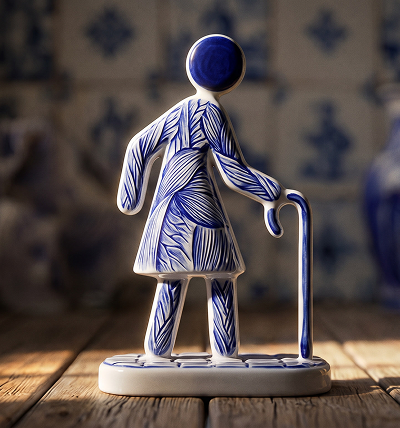
Walking or traveling3,5,7
a524 patients (78% females; mean age, 55 years; mean duration of illness, 7.89 years) with self-reported DM/PM and recruited from The Myositis Association and the Johns Hopkins Myositis Center were surveyed. A total of 38.6% of patients reported 'difficulty reaching over my head' and an increasing trend associated with mean work productivity loss and increasing flare frequency (P < 0.001) was observed.4 bQualitative interviews with 18 patients (61% female; median age, 52 years; median IIM duration, 5 years) with verified IIM diagnosis. Patients described difficulty washing and styling hair due to fatigue (quotation 3, 5 and 6) and pain (quotation 12).5
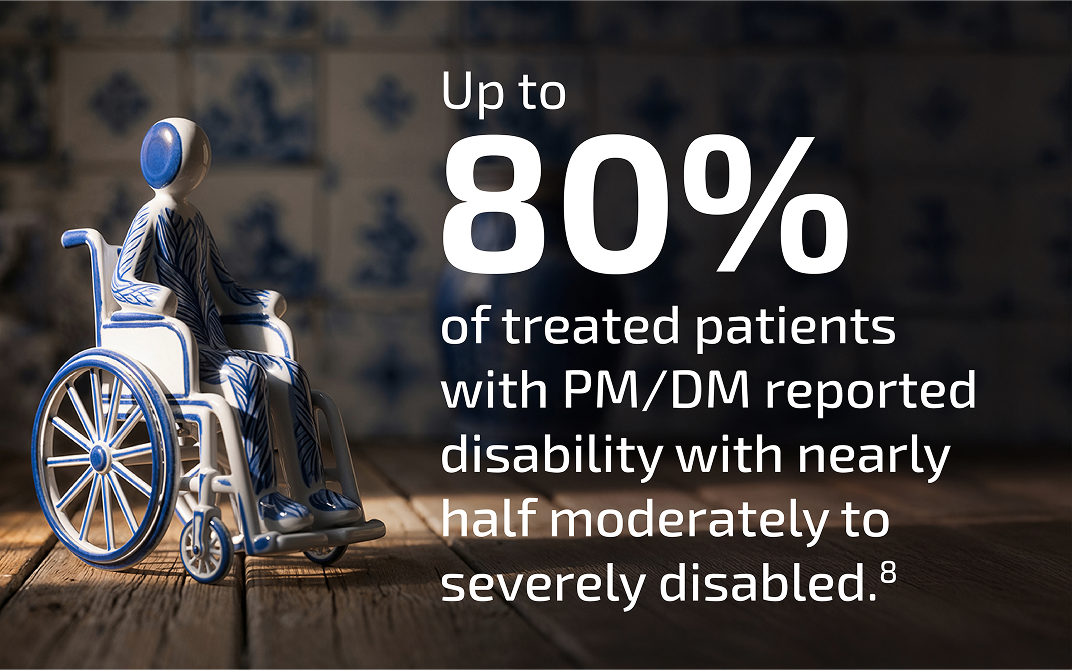
Persistent functional impairment may lead to permanent disability
Functional impairment can persist over time
Severe muscle weakness and visceral involvement can lead to sustained impairment in physical function. Long-term outcome data in polymyositis (PM)/dermatomyositis (DM) show that disability may persist despite treatment, supporting the need for new therapies to address the drivers of functional loss, a key component of AIM burden.9
Only 20%–40% of treated patients achieved remission or followed a monocyclic disease course, while 60%–80% experienced a polycyclic or chronic continuous course, based on two single-centre adult PM/DM outcome series comprising 77 patients with definite or probable PM/DM and 110 from a broader adult myositis cohort.10–12
Functional ability was analyzed in 87 patients (mean age, 41.3 years) with definitive IIM in a single center study in Hungary. The Hungarian version of the Stanford HAQ disability index (HAQDI), which was self-administered, was utilized, with scores that ranged from 0.0 - 3.0 (mildly disabled, 0.1–1.0; moderately disabled, 1.01–2.0; severely disabled, 2.01–3.0).
The median HAQDI score was 0.875 (range 0–2.875). 14 patients (17.5%) had no disability, 31 (38.8%) were mildly disabled, 25 (31.2%) were moderately disabled and 10 (12.5%) were severely disabled.
Pain and fatigue due to muscle damage often accompany weakness in AIM
Weakness rarely acts alone
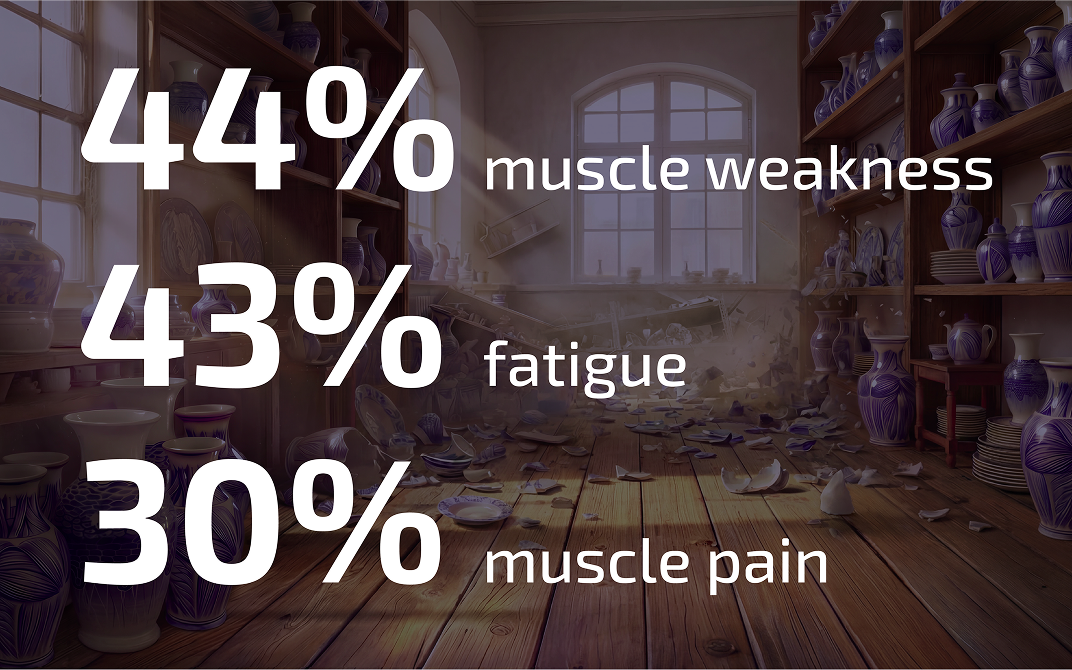
Weakness often occurs alongside fatigue and pain, which can impact functional burden. In a survey of adults with DM, the three most bothersome symptoms were muscle weakness, fatigue, and muscle pain.3
The study included 195 US adults aged 18–75 years with a self-reported healthcare provider diagnosis of dermatomyositis, disease duration ≥1 year, and membership of The Myositis Association; respondents were predominantly female (88%) and had a median age of 57 years. Participants completed a 60-question online survey designed to capture patient perspectives on the physical, psychosocial, and quality-of-life burden of dermatomyositis. Reported n values were 44% (86/195), 43% (84/195), and 30% (59/195).3
On the outside we look normal, we look well, you know, everybody says, “oh you look really well . . .” actually if they knew what a struggle it was for me to actually get to be somewhere … people don’t recognize the exhaustion and the tiredness that can go with it and the effort you have to put into doing the simplest tasks.
Patient quote5
Continue exploring the burden of AIM
Muscle weakness is one part of the multi-dimensional burden of AIM. Explore how extramuscular disease, mortality risk, and quality of life (QoL) impacts contribute to the broader patient experience.1,5
Extramuscular manifestations and mortality
Learn how AIM can affect the lungs, skin, gastrointestinal (GI) tract, joints, and heart, and why some complications are associated with serious outcomes.1,5
QoL and emotional/social impact
Understand how AIM can affect independence, work, relationships, mental health, and caregiver burden.13–16
Abbreviations:
AIM, autoimmune myositis; DM, dermatomyositis; GI, gastrointestinal; PM, polymyositis; QoL, quality of life.
References:
1. Lundberg IE, et al. Nat Rev Dis Primers. 2021;7:86; 2. Malik A, et al. Front Neurol. 2016;7:64; 3. Christopher-Stine L, et al. BMC Rheumatol. 2025;9(1):23; 4. Christopher-Stine L, et al. J Manag Care Spec Pharm. 2020;26(11):1424–1433; 5. Oldroyd A, et al. BMC Rheumatol. 2020;4:47; 6. Yoshida A, et al. Rheumatol Adv Pract. 2024;8(2):rkae028; 7. Dalakas MC. New England Journal of Medicine. 2015;372(18):1734–1747; 8. Ponyi A, et al. Rheuamtology(Oxford). 2005;44(1):83–7; 9. Marie I. Curr Rheumatol Rep. 2012;14:275-285; 10. Bronner IM, et al, Ann Rheum Dis 65, 1456–1461(2006); 11. Marie I, et al. J Rheumatol. 2001;28:2230–7; 12. Dimachkie M, et al. Neuro Clin. 2014;32(3):595–628; 13. Halilu F, Christopher-Stine L. Rheumatol Immunol Res. 2022;3(1):1–10; 14. Lanis A, et al. Clin Exp Rheumatol. 2024;42:413–424; 15. Peng Z, et al. Rheumatology(Oxford).2024;63:1113–1122; 16. Brady P, et al. Qual Life Res. 2025;34(7):1913–1924.